We are pleased to share a positive planning success. Working alongside the legal team at Kings Chambers and our client Victorian Plumbing, P4 Planning has successfully secured a positive appeal decision regarding a planning enforcement notice at Victorian Plumbing’s logistics and distribution headquarters in Leyland.
The Planning Inspector’s decision to grant planning permission to retain the boundary fence highlights the value of thorough planning history analysis, realistic fallback positioning and balanced negotiation within the planning system.
The Context
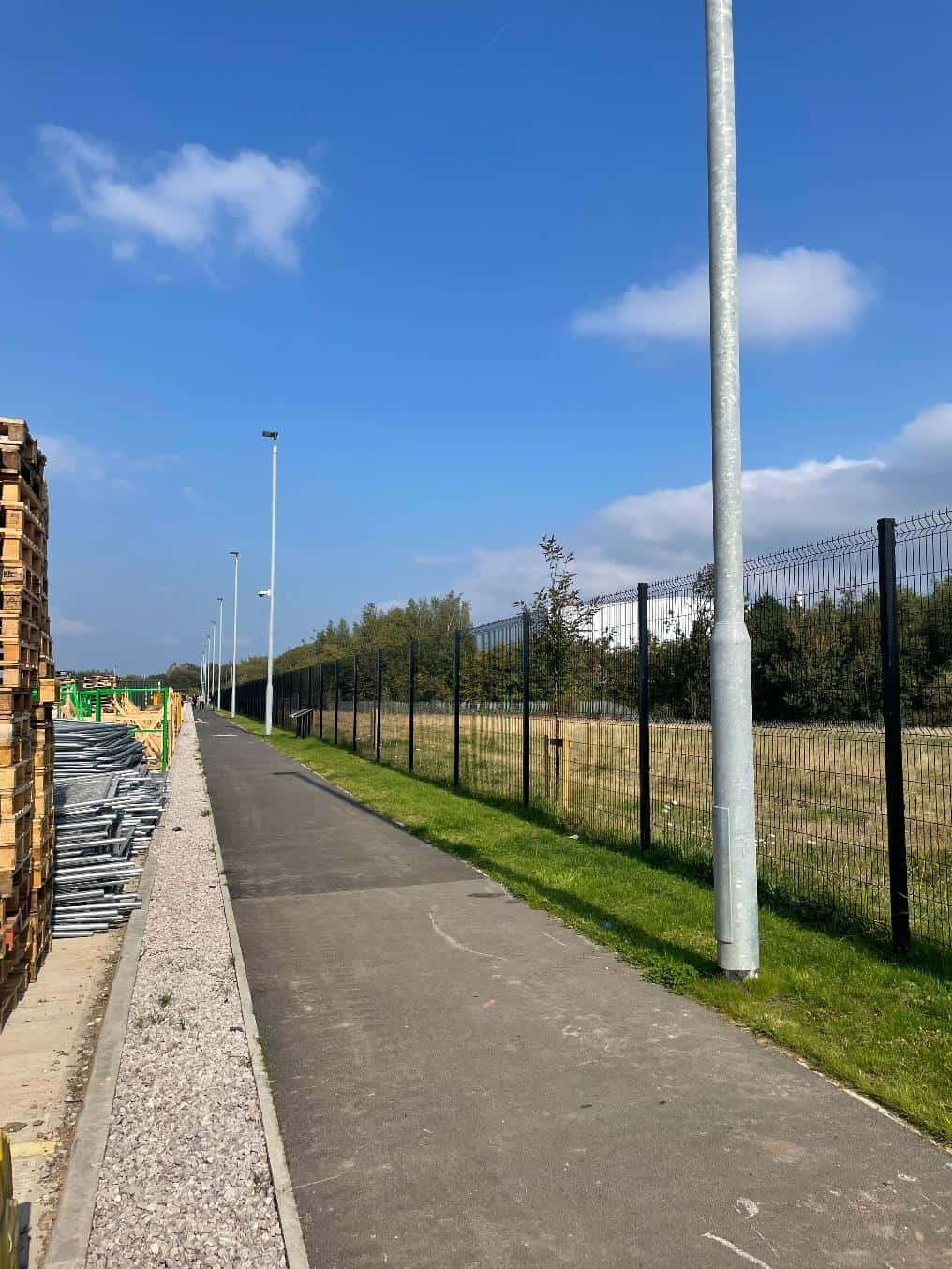
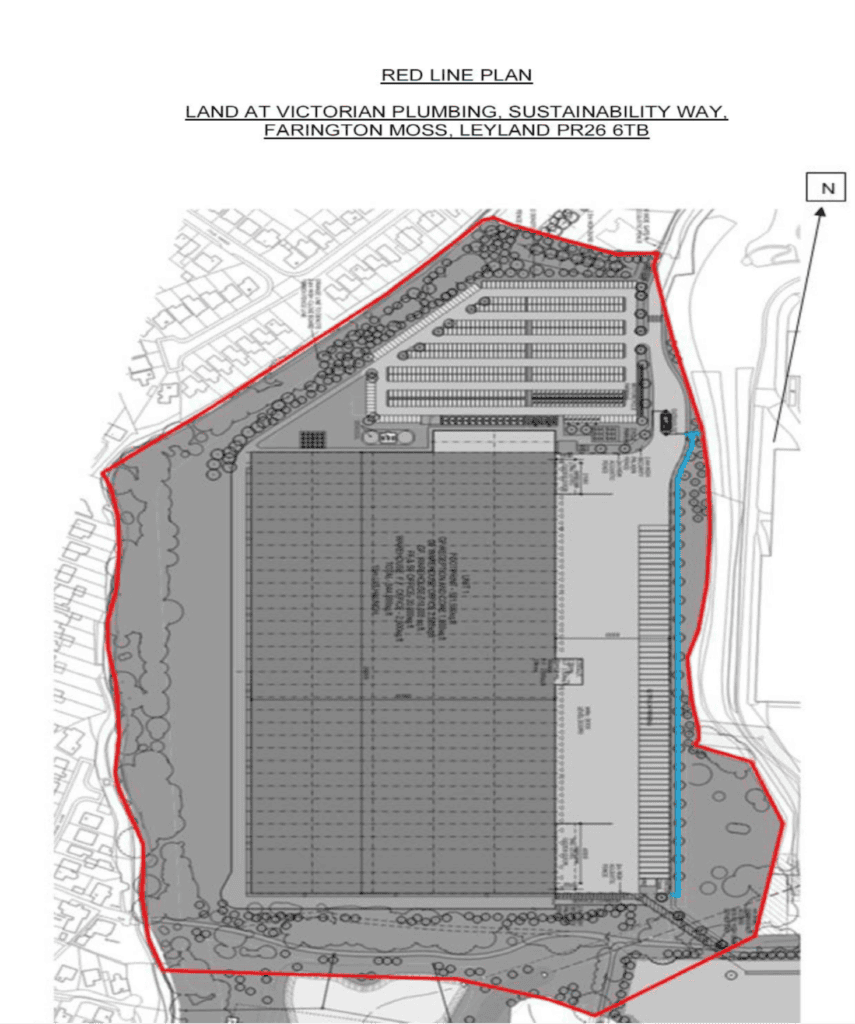
In March 2025, South Ribble Borough Council issued an enforcement notice regarding a 2.4-meter-high security fence and gates at the Sustainability Way site.
The Council’s position was centred on active travel. They argued that moving the fence to the outer edge of a pedestrian and cycle walkway restricted public access to local green space and conflicted with local transport policies. Consequently, they sought the removal of the fence.
From our client’s perspective, however, the fence relocation was driven by two critical operational and safety requirements:
Health & Safety: The originally approved fence line was positioned directly alongside a highly active HGV service yard. Moving the fence created a vital buffer to protect pedestrians from heavy vehicle manoeuvres.
Site Security: The site had experienced several security breaches. Securing the outer perimeter was necessary to safeguard staff and business assets.
With the Council taking the view that a retrospective planning application could not be supported, the formal appeal process became the constructive route to resolve these differing viewpoints.
Clarifying the Planning Arguments
The team prepared a comprehensive case under Ground (a) (that planning permission should be granted). Our approach focused on presenting clear, objective planning evidence:
- Verifying the Legal Status and Planning History of the Walkway
A detailed review of the site’s planning history confirmed that the original planning permission did not contain any condition, obligation, or reference designating this path for public use. While pedestrian connectivity was encouraged in high-level travel plans, no legal mechanism, such as a Section 106 agreement or specific planning condition, was ever put in place to dedicate the walkway as a Public Right of Way (PRoW).
Without this proper planning documentation or formal legal framework, the expectation of unrestricted public access was an assumption on the Council’s part rather than a secured planning requirement. The walkway remained entirely private land.
- Establishing a Realistic ‘Fallback’ Position
Under Permitted Development Rights (PDR), the client had the lawful right to erect a 2.0-meter-high fence in the exact same location without requiring planning permission. We demonstrated that the additional 0.4 meters in height had a negligible visual impact on the surrounding industrial estate, making the requirement to remove the fence entirely disproportionate.
- Assessing Alternative Public Routes
We showed that alternative, dedicated, and well-lit public pedestrian routes (such as Enterprise Drive) run parallel to the site. These routes offer comparable travel times and distances, ensuring that local active travel objectives are fully maintained.
The Inspector’s Decision
In May 2026, the Planning Inspector issued a decision that carefully balanced the Council’s policy objectives against the physical and legal realities of the site. The Inspector concluded that:
- The fallback option of erecting a 2.0-meter fence carried “significant weight” in the planning balance.
- There was no planning condition or legal requirement for the landowner to allow public access across this specific private path.
- Safe, suitable, and comparable alternative routes exist nearby for public use.
- The appearance of the fence was appropriate for its industrial and commercial setting.
As a result, the Inspector quashed the enforcement notice and granted planning permission to retain the fence.
The P4 Takeaway:
This case is an excellent example of how different, yet valid, priorities (such as public access versus site safety and security) can be balanced under planning law. By focusing on the legal frameworks, planning history, and practical fallback options, we were able to secure a constructive outcome that protects our client’s operational needs while respecting the wider planning context.
If you are navigating a complex planning enforcement matter or require strategic advice on commercial development, please contact the P4 Planning team.